Skip to content

Room 01 · History

Arrival and Gold

Journeys through Queensland, 1848–1926

Long before and beyond a lucky strike, migration meant labour, travel, food, family and adaptation.

Chinese gold digger starting for work, ca. 1860s

Richard Daintree photographed this unnamed Chinese miner in Queensland; the State Library of Queensland dates the portrait to the 1860s. The miner is unnamed in the catalogue; this portrait is not identified as Choo or Tom See Poy, and its location is not identified as Ravenswood or the Palmer.

Richard Daintree, ca. 1860s. State Library of Queensland, negative 60526. Out of copyright; free to use without permission. Attribute State Library of Queensland. Open the record (opens in a new tab)

Introduction

Journeys of work, travel and community

Long before and beyond a lucky strike, migration meant labour, travel, food, family and adaptation.

Follow Chinese workers and miners from Moreton Bay to the northern goldfields, then into the shops and communities they helped sustain.

Story 01

1848–1850

Before the rush: Moreton Bay and Choo

Chinese labourers reached Brisbane, in the Moreton Bay district, in 1848, before Queensland became a separate colony in 1859. Early employment included shepherding, farm work and domestic or general service.

A surviving 1850 agreement between a worker recorded as Choo and M. H. Marsh of Maryland Station gives this broad history an individual trace. It records terms of employment and provisions: a reminder that migration could begin with a labour contract rather than a miner’s claim.

A working life, set down on paper. This 1850 agreement between Choo and M. H. Marsh preserves the terms of one man's employment at Maryland Station—a small but tangible trace of migration before the gold rush.

Memorandum of agreement, 1850. John Oxley Library, State Library of Queensland, negative 161619. Open the record (opens in a new tab)

Reading the evidence

The document preserves an employer’s written framework, but tells us far less about Choo’s own voice or later life. Read the archival record beside this story rather than assuming that one contract represents every worker.

Story 02

1860s–1870s

A working day on the goldfields

Finding gold depended on repeated physical work: carrying equipment, moving earth and washing sediments.

Richard Daintree’s Queensland portrait of an unnamed Chinese miner, dated by the library to the 1860s, shows a shoulder yoke supporting a cradle and a water bucket. Look closely at the tools before imagining the working day.

On the Palmer, alluvial mining sat within a wider economy of stores, butchers, imported goods and market gardens. Living and working cooperatively helped miners cope with isolation, while high transport costs made everyday supplies expensive.

Preparing food, finding water, building shelter and caring for the sick were part of goldfield life, as essential as the search for gold.

The day's work begins with what can be carried. A cradle and water bucket hang from this unnamed miner's shoulder yoke in Richard Daintree's Queensland portrait, dated to the 1860s.

Richard Daintree, ca. 1860s. State Library of Queensland, negative 60526. Out of copyright. Open the record (opens in a new tab)

Reading the evidence

The photograph is a portrait of one person, not proof of conditions at every camp.

Story 03

1870

On the way to Ravenswood

A pen-and-wash sketch dated 9 December 1870 shows four Chinese men and a dog travelling towards the Ravenswood diggings. The artist, Donald Sydney Thistlethwayte, depicted shoulder poles, baskets and other carried belongings.

The scene draws attention to the journey itself: people had to move their working lives across country before mining could begin.

Four travellers, a dog, and the belongings they carry. Donald Sydney Thistlethwayte's sketch, dated 9 December 1870, turns our attention to the journey towards Ravenswood. This is an artist's view, rather than a photograph.

Donald Sydney Thistlethwayte, 1870. State Library of Queensland, image 6158/2; reproduced in The Learning Federation resource R9204. Open the record (opens in a new tab)

Catalogue title

‘Celestials’ on the way to Ravenswood diggings

“Celestials” was a colonial-era term for Chinese people. It appears here only because it is the work’s original title.

Reading the evidence

Read the sketch as an artist’s representation, not a photograph or an account in the travellers’ own words. This 1870 scene does not establish 1870 as the date gold was first discovered at Ravenswood.

Story 04

1873

Reading the rules: Charters Towers

Mining was governed by written rules as well as practical skill. A handwritten Chinese translation of the Gold Fields Regulations and the Gold Fields Act survives with an English note dated Charters Towers, 1 May 1873. It names Commissioner J. G. McDonald and the translator, James McHenley.

The document is evidence of official communication across languages on a Queensland goldfield. It invites us to consider how miners encountered colonial administration, without assuming that translation meant equal treatment.

Explore the original characters and the English annotation together.

Across the page, the rules of the goldfield take shape in Chinese characters. The English annotation names translator James McHenley and dates the notice to Charters Towers, 1 May 1873.

Chinese translation of the Gold Fields Regulations and Gold Fields Act, 1873. State Library of Queensland, negative 18224. Out of copyright. Open the record (opens in a new tab)

Reading the evidence

This is a translated notice dated 1873. It is not evidence that a new Act was passed in that year.

Story 05

1873–1877

Cooktown to the Palmer: routes and rush

The Palmer rush drew people into a remote goldfield from 1873. Cooktown became its coastal gateway, but reaching the diggings still required a demanding inland journey.

Tracks changed over time. The later Laura–Maytown coach road should not be treated as the single route used throughout the rush. The Queensland Heritage Register describes Robinson’s Track in 1876 and the road works that followed.

By 1877, the heritage record estimates, there were around 18,000 Chinese miners on the Palmer, about 90 per cent of its population. These are historical estimates.

Chinese miners worked alluvial deposits and built camp economies, while disease, wet-season disruption and expensive supplies made survival difficult. The goldfield’s expansion also disrupted Aboriginal lives and Country.

Machinery remains among the trees at the Palmer Goldfield Resources Reserve. This contemporary view brings the story back to the landscape visitors encounter today; it does not show the routes or camps of the 1870s.

Photograph: Nick Smith © Queensland Government. Queensland Parks and Forests. Open the record (opens in a new tab)

Reading the evidence

Follow the schematic map as an orientation to places, not as a reconstruction suitable for travel.

Story 06

1877–1926

Tom See Poy: a life beyond gold

Taam Sze Pui, later known as Tom See Poy, recalled arriving at Cooktown on 10 February 1877. The Australian National Maritime Museum reproduced his account of travelling inland with tools and provisions, and of the physical cost of the journey.

His later work took him from mining to restaurant employment, and then to plantation labour in the Johnstone River district in 1882. In July 1883 he and partners established the Kam Woh store at Mourilyan; the business later moved to the settlement now known as Innisfail. Family labour and trading relationships helped it grow into See Poy & Sons.

His 1925 memoir, My Life and Work, lets visitors encounter a migrant’s own account alongside later biography. He died in 1926.

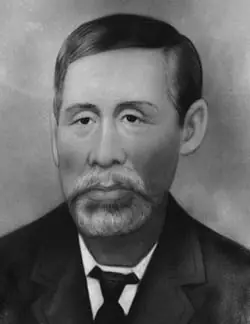
Tom See Poy, in an undated portrait held by the State Library of Queensland. Beside his account of work and travel, this photograph gives the story a face, without assigning an age or date the source does not provide.

Tom See Poy, date unknown. State Library of Queensland, image 31892, via the Australian Dictionary of Biography. Open the record (opens in a new tab)

Reading the evidence

Accounts of his birth year differ, so this gallery gives neither an exact birth year nor his age on arrival.

Story 07

Place story

Gympie: recovering individual names

A Gympie Regional Libraries research project brings Chinese miners, gardeners and shopkeepers into view through immigration files, leases, rates books, newspapers, cemetery records and maps. When it was reported in 2022, its collection included more than 260 names.

These records show how a goldfield community depended on food growing and trade as well as extraction.

Follow the local library’s research to explore individual lives.

A small newspaper cutting can open a much larger story. This extract from the Gympie Times, dated 18 December 1919, is among the records gathered by Gympie Regional Libraries to trace Chinese lives in the district.

Gympie Times, 18 December 1919. Image reproduced in Gympie Regional Libraries' research article, 11 March 2022. Open the record (opens in a new tab)

Reading the evidence

Read names carefully: English spellings could vary, and similar entries do not automatically describe the same person. This is documentary research, not an archaeological excavation.

Story 08

Place story

Croydon and Maytown: reading what remains

At Croydon’s Chinese Temple and Settlement Site, foundations, house footings, an oven and artefact scatters preserve traces of work, worship and everyday life. The council’s heritage trail interprets these remains. Together they form a landscape of relationships, not simply a display of isolated objects.

At Maytown and across the Palmer, building traces, mining workings, cemeteries and scattered material offer different kinds of evidence. Archaeologists ask where objects were found and what lay around them; removing a fragment destroys part of that context.

Follow the heritage records to see how documentary and archaeological evidence meet. Leave objects in place and respect access conditions.

People gather outside Maytown's general store in the 1880s. The photograph offers a glimpse of the town before its buildings disappeared, giving a different kind of evidence to read alongside the remains in the landscape.

Maytown General Store, 1880s. State Library of Queensland, negative 23746. Open the record (opens in a new tab)

Reading the evidence

Not all mining machinery on the Palmer, nor every ceramic fragment found there, was Chinese-owned.

Timeline

Dated moments, 1848–1926

Open an entry for more detail, then follow it to the story it belongs to.

Associated place stories

These stories are tied to places rather than to a single date, so they are not given dates here.

  1. 1848Chinese labourers reach Brisbane

    Labourers arrive in the Moreton Bay district, before Queensland becomes a separate colony in 1859. Early work includes shepherding, farm work and domestic or general service.

    Open story: 01 · Before the rush: Moreton Bay and Choo
  2. 1850The Choo agreement

    A worker recorded as Choo enters an agreement with M. H. Marsh of Maryland Station, setting out terms of employment and provisions.

    Open story: 01 · Before the rush: Moreton Bay and Choo
  3. 9 December 1870A sketch on the way to Ravenswood

    Donald Sydney Thistlethwayte dates a pen-and-wash sketch of four Chinese men and a dog travelling towards the Ravenswood diggings.

    Open story: 03 · On the way to Ravenswood
  4. 1 May 1873A translated notice at Charters Towers

    An English note dated at Charters Towers accompanies a handwritten Chinese translation of the Gold Fields Regulations and Gold Fields Act.

    Open story: 04 · Reading the rules: Charters Towers
  5. 1873–1877The Palmer rush

    People travel into the remote Palmer goldfield, with Cooktown as its coastal gateway. By 1877 the heritage record estimates around 18,000 Chinese miners there.

    Open story: 05 · Cooktown to the Palmer: routes and rush
  6. 1876Changing access routes

    The Queensland Heritage Register describes Robinson’s Track in 1876 and the road works that followed. Tracks changed over the course of the rush.

    Open story: 05 · Cooktown to the Palmer: routes and rush
  7. 10 February 1877Taam Sze Pui arrives at Cooktown

    Taam Sze Pui, later known as Tom See Poy, recalled arriving at Cooktown on this date before travelling inland.

    Open story: 06 · Tom See Poy: a life beyond gold
  8. 1882–1883Plantation work and the Kam Woh store

    In 1882 he works on plantations in the Johnstone River district. In July 1883 he and partners establish the Kam Woh store at Mourilyan.

    Open story: 06 · Tom See Poy: a life beyond gold
  9. 1925My Life and Work

    Tom See Poy’s memoir, My Life and Work, dates from 1925. It gives a migrant’s own account of his life.

    Open story: 06 · Tom See Poy: a life beyond gold
  10. 1926Death of Tom See Poy

Map

Places on the journey

Select a place on the map or in the list to see the stories connected with it.

Place with storiesSchematic connection, not a route

Schematic map: places are shown in approximate positions on a simplified outline of Queensland.

The dashed Cooktown–Palmer line is schematic only. It is not a historic track, and tracks changed during the rush.

Outline simplified from Natural Earth public-domain map data. Not to scale for travel.

Selected place

Choose a place to see its stories.

All places on the map

  1. 1.Brisbane / Moreton Bay

    Chinese labourers reached Brisbane, in the Moreton Bay district, in 1848.

  2. 2.Gympie

    Library research recovers the names of Chinese miners, gardeners and shopkeepers.

  3. 3.Ravenswood

    The destination of the travellers in an 1870 sketch.

  4. 4.Charters Towers

    Where a Chinese translation of the goldfield rules was dated, 1 May 1873.

  5. 5.Cooktown

    The coastal gateway to the Palmer goldfield, and where Tom See Poy recalled arriving in 1877.

  6. 6.Palmer goldfield / Maytown

    The remote goldfield of the 1870s rush, where traces of buildings, workings and cemeteries remain.

  7. 7.Innisfail

    Where the Kam Woh business, begun at Mourilyan, later moved and grew into See Poy & Sons.

  8. 8.Croydon

    Home of the Chinese Temple and Settlement Site and its heritage trail.

Object cabinet

Archival objects and places

The museum does not own these objects. They are held by other institutions or remain where they lie, and each card says which.

Reproduced here

  • Photograph · Richard Daintree · State Library of Queensland · negative 60526

    Portrait of an unnamed Chinese miner, ca. 1860s

    A shoulder yoke supports a cradle and a water bucket. Select the image to see it in full.

  • Handwritten document · Charters Towers, 1 May 1873 · State Library of Queensland · negative 18224

    Chinese translation of the Gold Fields Regulations and Gold Fields Act, 1873

    Chinese characters with an English note naming Commissioner J. G. McDonald and translator James McHenley.

    Reproduced from the State Library of Queensland’s digitised scan. Select the image to read it full size, or open the record to see it in the library’s viewer.

  • Agreement · John Oxley Library, State Library of Queensland · negative 161619

    Memorandum of agreement between Choo and M. H. Marsh, 1850

    Terms of employment and provisions for a worker recorded as Choo, at Maryland Station. Seen through the library’s blog post.

  • Pen-and-wash sketch · Donald Sydney Thistlethwayte · State Library of Queensland image 6158/2

    ‘Celestials’ on the way to Ravenswood diggings, 1870

    Four Chinese men and a dog travelling with shoulder poles and baskets. The title uses a colonial-era term.

Linked records

Records we link to rather than reproduce, because their item rights have not been confirmed.

  • Memoir extract · from My Life and Work (1925) · reproduced by the Australian National Maritime Museum

    Taam Sze Pui’s account of arriving at Cooktown

    His own account of the journey inland. Opens an archived copy of the museum’s page.

  • Research collection · Gympie Regional Libraries · reported 2022

    Chinese miners, gardeners and shopkeepers in Gympie

    Immigration files, leases, rates books, newspapers, cemetery records and maps, with more than 260 names.

Remains in place

Heritage sites whose remains stay where they were found. Visit with care and respect access conditions.

Sources and rights

References

Every source used in this gallery, in story order.

  1. Rutian Mi, “Chinese Business History in Queensland – Pre gold rush: 1840–1850” (opens in a new tab)

    State Library of Queensland blog, 2 April 2020. Shows the Memorandum of agreement between Choo and M. H. Marsh, 1850 (John Oxley Library, negative 161619).

  2. Chinese gold digger starting for work, ca. 1860s (opens in a new tab)

    Richard Daintree. State Library of Queensland, negative 60526. Out of copyright.

  3. ‘Celestials’ on the way to Ravenswood diggings, 9 December 1870 (opens in a new tab)

    Donald Sydney Thistlethwayte, pen and wash. State Library of Queensland image 6158/2, described by The Learning Federation (resource R9204).

  4. Chinese translation of the Gold Fields Regulations and Gold Fields Act, 1873 (opens in a new tab)

    State Library of Queensland, negative 18224. Out of copyright.

  5. Palmer Goldfield Resources Reserve: nature, culture and history (opens in a new tab)

    Queensland Parks and Forests.

  6. Palmer River Goldfield, Queensland Heritage Register place 600427 (opens in a new tab)

    Queensland Government heritage record.

  7. Taam Sze Pui, Waves of Migration (opens in a new tab)

    Australian National Maritime Museum. The page is no longer at its original address; this link opens an Internet Archive copy saved on 7 September 2024.

  8. Catherine May, “See Poy, Tom” (opens in a new tab)

    Australian Dictionary of Biography, National Centre of Biography, Australian National University.

  9. Chinese miners, gardeners & shopkeepers in Gympie (opens in a new tab)

    Gympie Regional Memories, Gympie Regional Libraries, 11 March 2022. Its photographs, including Ah Foy, are linked rather than reproduced.

  10. Chinese Temple Site (opens in a new tab)

    Croydon Shire Council, history and heritage.

  11. Queensland Places – Maytown (opens in a new tab)

    State Library of Queensland blog.